Few jobs on the outside of a house are as easy to put off as guttering. Then a joint leaks, a section sags, and you have to pick a material. For most homes the choice comes down to uPVC or cast iron.
Both do the same job, but they behave very differently. This guide compares cost, upkeep, looks and age, so you can choose with confidence.
What each material is
uPVC is a rigid plastic. It is light, easy to cut and quick to fit. Most homes built in the last few decades have it, usually in black, white or brown.
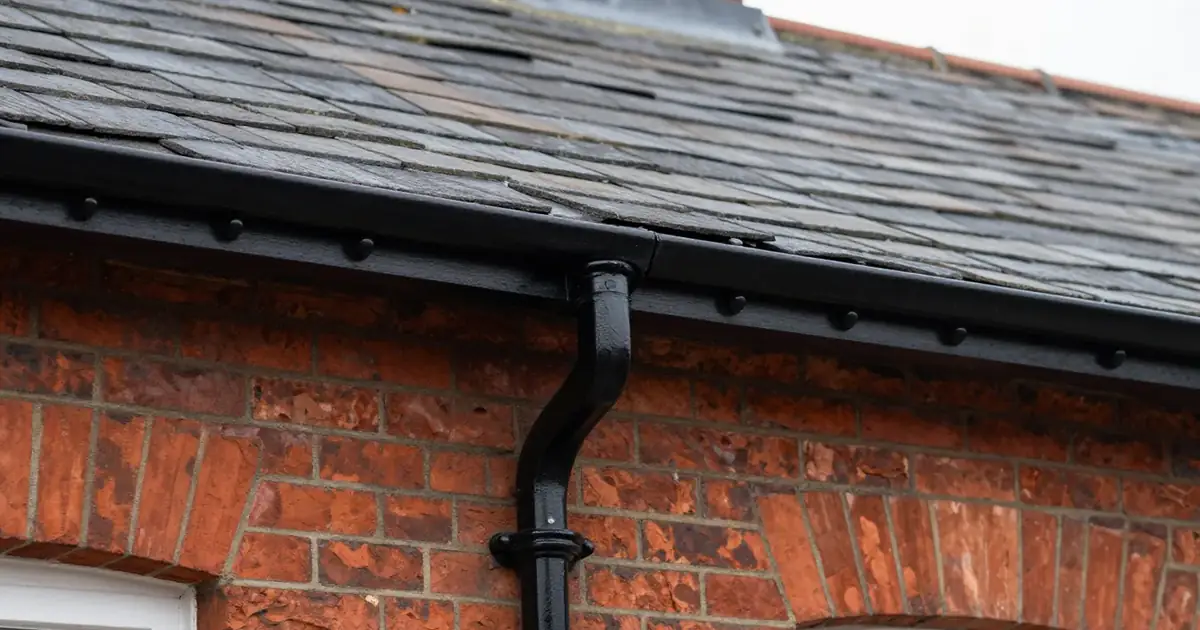
Cast iron is a heavy, traditional metal. It suits period homes, and it has a solid look that plastic struggles to copy. In contrast to uPVC, it needs paint and care to stay sound.
A third option, aluminium, sits between the two. We focus on uPVC and cast iron here because those are the two most people weigh up.
Cost: what you can expect to pay
Price is usually the first question. Fitted uPVC guttering typically costs about £30 to £70 per metre, and £40 to £50 is common. Cast iron is far dearer, commonly £50 to £130 per metre, and more for ornate period profiles.
The sources for cast iron disagree quite a lot, so treat any single figure with caution. The best way to get a real number is a free fixed quote based on your roofline. For a wider view of what jobs cost, see our pricing page.
As a rough guide, replacing all the guttering on a typical house in uPVC usually lands around £1,000 to £1,600. Cast iron will push that higher, because both the material and the labour cost more.
Upkeep and life span
Here the gap is clear. uPVC mostly needs an occasional clean, and it does not rust. Over time, however, sun can fade it, and cold can make it brittle.
Cast iron asks for more effort. Historic England says regular inspection, routine maintenance and scheduled repairs are essential to stop water damaging a building. In practice that means checking for rust, repainting when the coat fails and fixing small leaks early.
Neglected cast iron can crack or corrode through, because rust spreads once the paint has gone. Our post on gutter repair vs replacement explains how to tell a fixable fault from one that needs a new run.
Looks and fit with your home
Appearance matters more on some streets than others. A Victorian terrace with plastic gutters can look slightly off, while a 1990s estate home looks right with uPVC. In Royal Leamington Spa, for instance, Regency-era buildings sit in a large conservation area, so style counts. We cover gutter cleaning in Leamington Spa, about 11 miles from Coventry city centre.
Hinckley has its own mix of old and new, from historic cottages in the centre to later housing. If you live there, our page on gutter cleaning in Hinckley covers the area.
If you are not sure what suits your roofline, ask for advice before you commit. Colour, profile and bracket style all change the finished look, while the wrong choice can be costly to undo.
Listed and older homes
If your home is listed, changing its rainwater goods may need permission. Replacing cast iron with plastic, for example, can need listed building consent. Each case is judged on its own merits, so check with your local council before you replace anything.
The Historic England guidance does not set out conservation area rules, so we cannot tell you what applies on your street. Ask the council, and do it before you order materials. Where old cast iron cannot stay, it is good practice to photograph and record it first.
Part replacement can also be tricky. Plastic and aluminium are hard to connect to lead and cast iron, so a mixed run needs careful fittings.
Weight, fit and the wider system
Weight matters more than most people expect. Cast iron is heavy, so it needs strong brackets and a sound fascia, whereas uPVC puts far less load on the roofline. If your boards are tired, that difference alone can steer the choice.
Fit matters too. Gutters work as a system of channel, joints, brackets and downpipes, and every part must suit the others. Mixing parts from different ranges can leave small gaps that leak, so ask your fitter to match them.
Which should you choose?
Choose uPVC if you want low cost, low upkeep and a quick job. It suits most modern homes and many older ones that are not listed. It is also the easier material to repair in the long run.
Choose cast iron if the house is period, listed, or you want the original look. Accept that you will pay more at the start and keep up the maintenance. In return you get a solid, traditional finish.
Whichever you pick, a clean gutter lasts longer. Standing water and debris speed up wear on both materials, since both suffer when water sits in the channel. Our guide to what happens if you don’t clean your gutters shows how fast small problems grow.
Check the fixings first
Check the condition of the fascia as well. Fixings need something sound to hold on to, and a rotten board will undo a new run. We explain this in our post on fascia and soffits.
Brackets matter too, because cast iron is heavy and needs strong supports. If a gutter is already pulling away, read why in gutters pulling away from the fascia. Often the fix starts with the fixings, which our gutter repair service can sort out.
Damp patches are another clue that a gutter is failing. Our article on whether blocked gutters can cause damp covers the signs to watch for.
Next steps
If you want to know which route suits your home, we can look at the gutters and give honest advice. Our gutter replacement service covers the main options, and we only suggest a full replacement when it makes sense.
Ready to compare? Get a free quote and we will give you a fixed price with no obligation.
Frequently asked questions
Is cast iron guttering more expensive than uPVC?
Yes, usually by a wide margin. Typical fitted prices run from about £30 to £70 per metre for uPVC and commonly £50 to £130 per metre for cast iron, more for ornate profiles. A free fixed quote gives you the real figure for your house.
Can I replace cast iron gutters with plastic on an older house?
Sometimes, but not always. If your home is listed, swapping cast iron for plastic may need listed building consent, so ask your local council before you replace anything.
Which material needs less maintenance?
uPVC needs the least. Cast iron needs regular inspection and repainting to keep rust away, while uPVC mostly needs an occasional clean.
Can I mix old and new gutter materials?
It is hard to do well. Joining plastic or aluminium to cast iron or lead is awkward, so a part replacement often needs careful fittings.
- uPVC guttering
- cast iron guttering
- gutter replacement
- coventry